Dry weekdays or earlier daytime slots work best because the marked paths and grass surfaces are easier to navigate when the ground is firm. After rain, traction matters more than speed, so avoid treating this as a casual stop in unsuitable footwear.
Quick overview
- Access: Included with Battle Abbey admission; no separate battlefield-only ticket is needed.
- When you'll see it: After the Gatehouse introduction, as part of the abbey-and-battlefield visit.
- Visit duration: 45–90 minutes self-guided for the battlefield loop; 1.5–3 hours with the abbey grounds.
- Best time: Dry weekdays or early in the day for firmer ground and a quieter landscape.
- Restrictions: Stay on marked paths, keep dogs on leads, and avoid drones or climbing on earthworks.
How to access the Hastings Battlefield?
The Hastings Battlefield is included with Battle Abbey admission, and no separate ticket is needed. You typically encounter it after starting at the Gatehouse, where the introductory film and audio-guided route set up the landscape you are about to cross. Treat it as the core of a wider 1066 visit, because the field makes the most sense when experienced with the abbey ruins and interpretation together.
How to best experience the Hastings Battlefield

Best time to visit

How long to spend
Allow 45–90 minutes for a self-guided battlefield circuit, or 1.5–3 hours if you're pairing it with Battle Abbey grounds. A 15–25-minute stop only covers a quick viewpoint rather than the site's full interpretive value.

Where it fits in your itinerary
Start with the Gatehouse film and audio route, then move onto the battlefield loop before adding the abbey remains and gardens. If you're coming from Brighton or the Sussex coast, this works best as a half-day anchor rather than a rushed add-on.

Crowd and route planning
This is an outdoor heritage landscape rather than a compact museum visit, so the experience depends more on pace and conditions than on queueing. Build in short pauses at viewpoints and the gatehouse terrace so the field reads clearly rather than as open grassland.

What to prioritise if time is short
If you only have a short visit, focus on the introductory film, a key battlefield viewpoint, and the marked route sections that explain troop movement and terrain. These give you the clearest historical framework without attempting the full circuit.

Common mistakes to avoid
Don't arrive expecting a standalone indoor museum, and don't underestimate the walking surfaces after wet weather. Another common mistake is skipping the audio interpretation, which leaves the landscape harder to decode as a battle site.
Why it's worth seeing
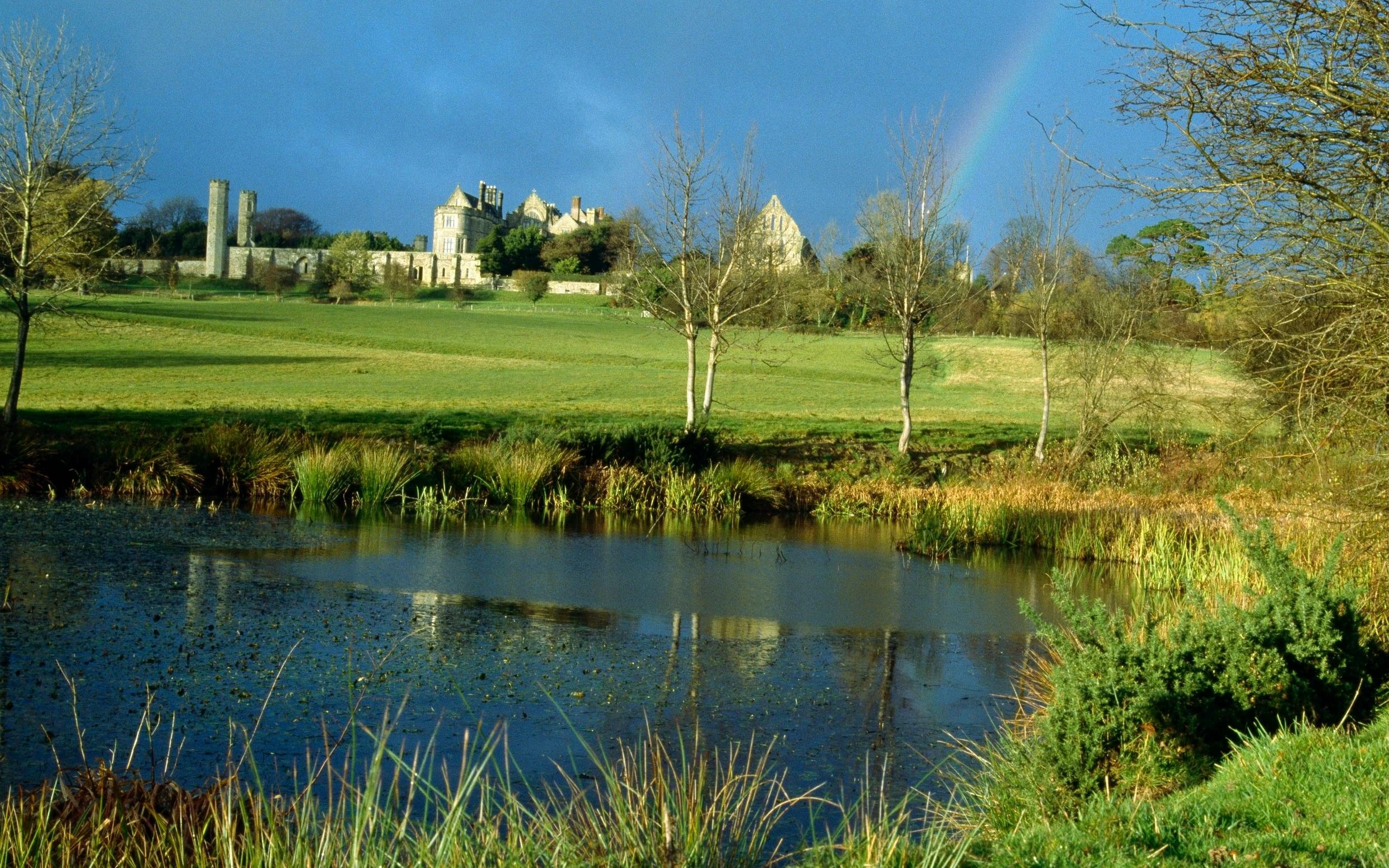
What makes the Hastings Battlefield distinct is that the landscape itself carries the story: you are reading slopes, sightlines, paths, and preserved ground rather than moving through a reconstructed gallery. Many visitors do not realise how much the experience depends on the audio route and marked viewpoints, which turn open terrain into a readable battle narrative. Focus on the features below to understand why this site matters beyond the abbey ruins.
The Gatehouse introduction
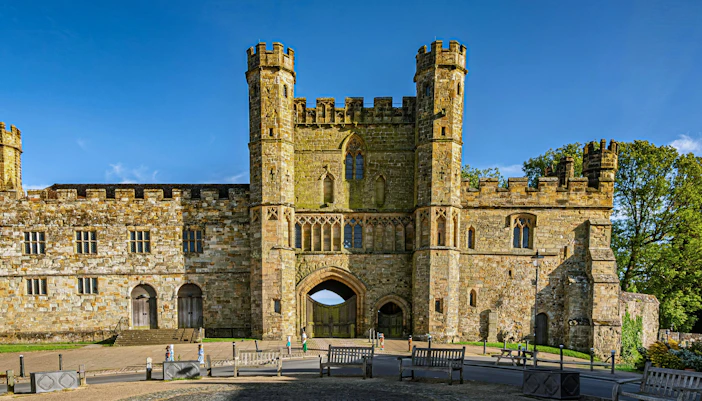
Start here for the film and orientation before you step onto the field. This is where the site shifts from open countryside to an interpreted battlefield, giving you the framework to understand the rest of the visit.
The marked battlefield loop
The route uses paths, viewpoints, and interpretation boards to connect the terrain to troop movement and the battle sequence. Walking it at a measured pace is what turns the site from scenery into historical evidence.

Battle Abbey and the memorial layer
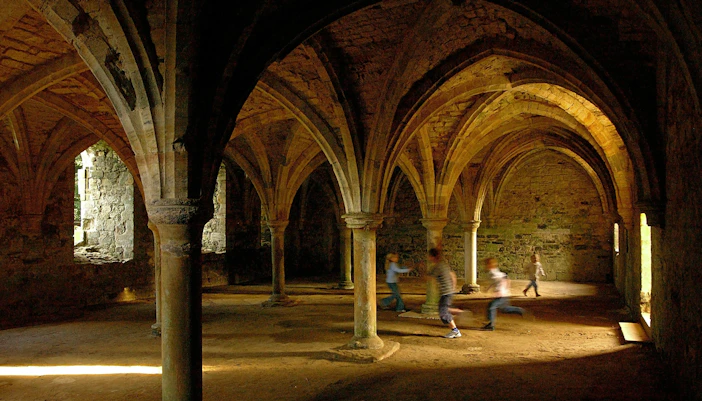
The abbey ruins give the battlefield a second meaning as both historic ground and memorial landscape. Seeing the field in the abbey context explains why this was preserved not just as terrain, but as a site of remembrance.
Historical & cultural significance
The site matters because it preserves the landscape of the battle fought on October 14, 1066, when William the Conqueror defeated Harold Godwinson and altered the course of English history. Battle Abbey was later founded by William as a memorial and penance, linking the battlefield to a lasting monument. Today, the grounds function as both a heritage landscape and interpretive site rather than a simple ruin.
Notable figures
William the Conqueror | Norman leader
Won the 1066 battle and later founded Battle Abbey as memorial and penance.
Harold Godwinson | English king
Defeated at Hastings, ending Anglo-Saxon rule and reshaping English succession.
Pope Alexander II | Papal supporter
His backing strengthened William's campaign legitimacy in the wider European context.
Know before you go
- Open daily, generally 10am to 5pm in summer; winter hours reduce to 10am to 4pm
- Last entry: 1 hour before closing
- Site managed by English Heritage; opening days vary during off-peak seasonal periods
- Entry ticket required for non-members; pre-booking available online
- Site closed 24–26 December and 1 January
- Address: High Street, Battle, East Sussex, TN33 0AD, United Kingdom
- Nearest railway station: Battle, approximately 0.6 miles (10-minute walk) from the main site entrance
- Road access: Located off the A21 and A2100; main visitor entrance via High Street
- On-site parking available for a charge; free parking available for English Heritage members
- Main entrance point leads through the visitor centre and gatehouse to reach the abbey ruins and battlefield area
- Wheelchair access: Main visitor centre, exhibition area, and cafe are level and fully accessible
- Battlefield path: Combination of gravel, grass, and pitched terrain with varying gradients
- Accessible toilets are available in the main visitor centre and near the abbey site
- Mobility scooters permitted on paved and main gravel routes across the grounds
- Audio guides available at the entrance with descriptive commentary options
- Dogs are permitted on site and must be kept on short leads at all times
- Drones and unauthorised aerial photography are strictly prohibited across the entire site
- Picnics are permitted in designated outdoor areas; no food or drink inside the exhibition rooms
- Large luggage or oversized bags are not permitted inside the exhibition space
- Metal detecting, digging, or removal of any items or turf from the site is illegal
- Battlefield trail consists of a circular walk of approximately 1 to 1.5 miles (1.6 to 2.4 km)
- Terrain includes steep outdoor inclines, uneven grassy ground, and unpaved sections
- Terrace and gatehouse access includes stone staircases without elevator access
- Outdoor exposure across the open battlefield area with minimal shelter along the full circuit
Frequently asked questions about the Hastings Battlefield
Yes. Entry to the Hastings Battlefield is included with Battle Abbey admission. No separate battlefield-only ticket is needed.
No. Standard Battle Abbey admission covers the battlefield. The main choice is how much time you want for the field, abbey, film, and audio route.
No. The battlefield is experienced as part of the Battle Abbey heritage site. Visitors typically begin at the Gatehouse and follow the site's route.
Usually near the start, after the Gatehouse introduction. Most visitors use the film and audio route before heading out onto the field.
Allow 45–90 minutes for the battlefield loop. Pair it with the abbey grounds and the visit can take 1.5–3 hours.
Yes. The site is commonly interpreted through an on-site audio route, and guided walks may run seasonally for deeper context.
Partly. The gatehouse area and some viewpoints are accessible, but much of the battlefield loop crosses uneven ground.
Yes. Dogs on leads are welcome in most outdoor areas. Keep them on leads to protect wildlife and the historic ground.
Wear sturdy footwear and bring weather layers. Grass, gravel, and mud can make the route slippery after rain.