
Your visit begins with orientation rather than instant spectacle. The gatehouse film, audio guide, and exhibits frame what you’re about to see, so the abbey and battlefield feel connected instead of separate stops.
Inside Battle Abbey | A walk through history from gatehouse to battlefield
Quick overview
Step inside Battle Abbey to experience 1066 as a layered journey rather than a distant event, with interpretation, ruins, and the battlefield all connected into one visit.
- What makes it special: Start at the gatehouse with the film and audio interpretation, then move through abbey remains, exhibitions, and the battlefield route for a fuller sense of place.
- Look out for: The gatehouse rooftop views and quieter cloister-linked spaces, which add atmosphere beyond the main battlefield story.
- Pro tip: Begin indoors if the weather looks uncertain, then continue outside once you’ve got the historical context.
Jump ahead to Top highlights, Navigating by floor, or How to explore the Battle Abbey interior.
What to expect inside Battle Abbey?
From the outside, Battle Abbey can seem like a quiet historic ruin set in open countryside. Step inside, though, and the experience becomes much richer: you move through interpretation spaces, ruined monastic architecture, reflective interiors, and the battlefield itself in a sequence that helps the story of 1066 unfold naturally.
A story-led arrival
Ruins that still feel inhabited
The abbey remains are more than fragments of stone. They reveal the monastic footprint, the scale of the religious complex, and the memorial purpose behind the site, giving the landscape emotional depth as well as historical weight.
Quiet corners beyond the battlefield
Spaces linked to the cloister, refectory, abbot’s hall, and undercrofts shift the mood from dramatic history to everyday medieval life. These quieter areas often become the most memorable parts of the visit for travellers who like detail and atmosphere.
An indoor-outdoor historical journey
What makes Battle Abbey distinctive is the way interior interpretation prepares you for the battlefield outside. If time is limited, prioritise the gatehouse materials and the abbey core first, then follow the battlefield route with that context in mind.
Map & orientation
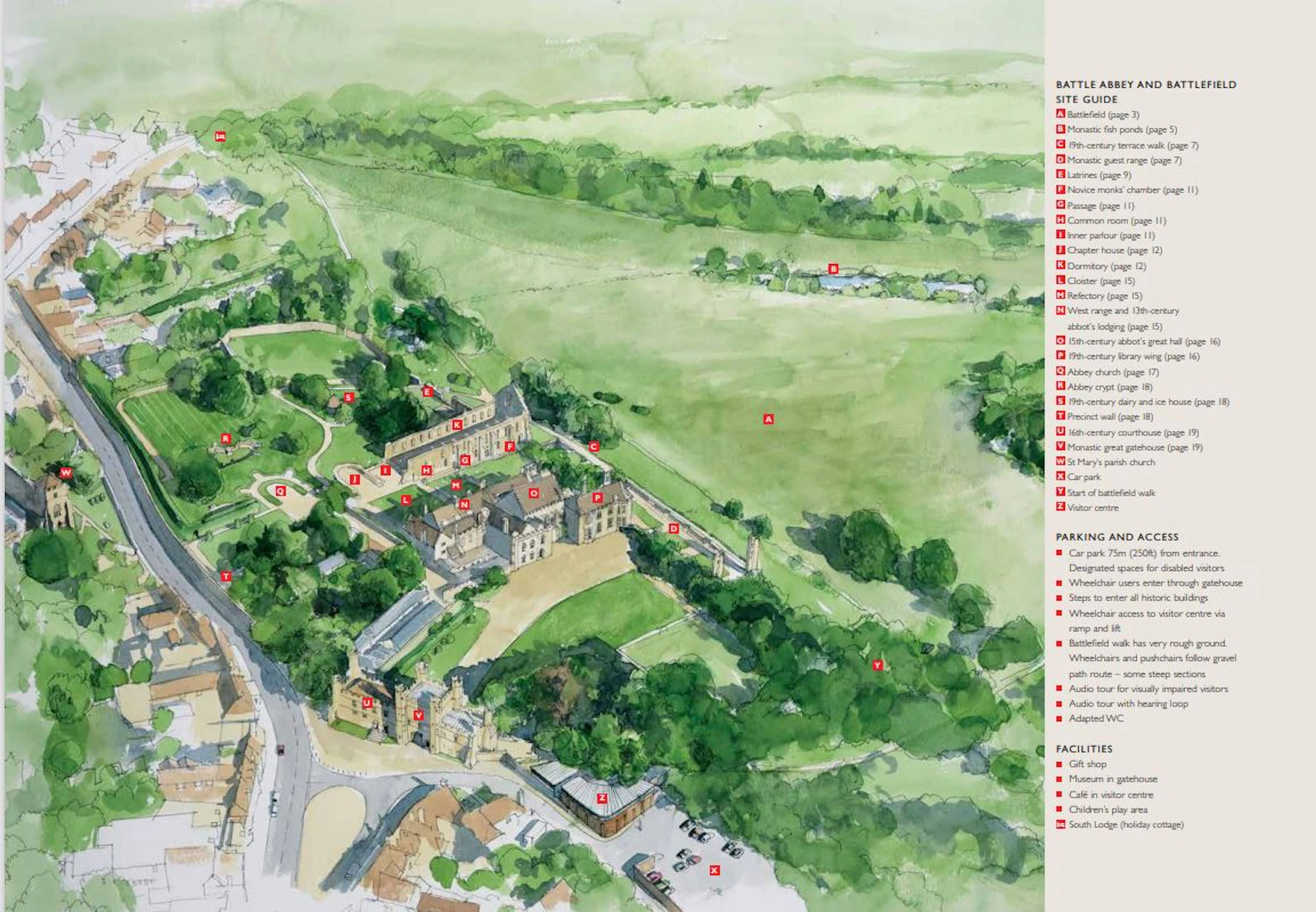
Battle Abbey is arranged as a clear, story-led sequence rather than a maze of disconnected rooms. Key zones include the gatehouse arrival area with the short film and audio tour, the abbey ruins and monastic footprint, cloister-linked interiors, exhibition areas, gardens, the visitor centre, and the battlefield grounds connected by paths. A smart route is to begin indoors for context, head out across the battlefield once the story is fresh, and then return to the abbey’s quieter corners at a slower pace.
Key interior highlights you shouldn’t miss

Gatehouse exhibits and rooftop views
Gatehouse displays introduce the site’s big ideas before you step onto the grounds.
Why it matters: They set the historical context and give you a useful elevated view.
Pro tip: Head here early to orient yourself before the main walk.
Inside Battle Abbey
Follow the visit as a sequence of connected zones, from arrival interpretation to reflective interiors and the battlefield beyond.
Gatehouse arrival and film start
Begin here for orientation and the short film, which frames the visit before you step into the wider site. It’s the clearest way to understand how the abbey, memorial purpose, and battlefield are meant to be experienced together.
Gatehouse exhibition spaces
These displays introduce artefacts, interpretation, and the broader story of Hastings in a manageable format. Spend time here if this is your first visit, because the outdoor route becomes more meaningful once the key events and geography are fresh in mind.
Abbey ruins core
Walk through the nave area and surrounding monastic remains to get a physical sense of the abbey’s former scale. This part grounds the historical narrative in architecture, not just panels, and helps you read the site as a lived religious complex.
Cloister remains and undercroft
These quieter, more enclosed areas slow the pace and reveal the abbey’s everyday rhythms. They work well as a contrast to the open battlefield, offering a more intimate view of medieval function, routine, and atmosphere.
Battlefield grounds
Step out onto the landscape where the story broadens from stone remains to terrain, slopes, and sightlines. Interpretation stops help you connect what happened here to the route you’re walking, making the outdoors feel like part of the interior experience.
Duchess of Cleveland’s Walled Garden
This is a gentler interlude in the visit, offering a place to reset after the battlefield route. It adds variety to the experience and helps balance the site’s heavier historical themes with a quieter, restorative pause.
Gatehouse rooftop views and café
End with a final elevated view and a break at the café if time allows. This closing stretch helps you reflect on the site from above and finish at a calmer pace rather than rushing straight from the grounds to the exit.
How to explore Battle Abbey
- Entry process: Book online when possible and start at the gatehouse, where standard admission includes the film and audio guide.
- Best times: Morning midweek visits in shoulder seasons are often calmer, especially if you want quieter interior spaces before heading onto the grounds.
- Duration: Allow 1.5–3 hours for a full visit, or 60–90 minutes for a shorter essentials-focused route.
- Itinerary: Gatehouse film → exhibition spaces → abbey ruins core → cloister and undercroft areas → battlefield route → garden or café pause.
- Rules/Accessibility: Some areas have steps or uneven surfaces, but there are accessible routes and seating points; ask staff if you need a mobility-friendly path.
- Tips: Use the audio guide throughout, begin indoors if rain is forecast, and pair the abbey with Hastings or other Sussex sites if you want a fuller 1066-focused day.
Frequently asked questions about what’s inside Battle Abbey
Battle Abbey is the English Heritage site officially named the 1066 Battle of Hastings, Abbey, and Battlefield. It combines abbey ruins, the preserved battlefield, exhibition spaces, a short film, and an audio tour included with admission, making it both a historical site and a structured visitor experience.
Most visitors spend around 1.5–3 hours exploring the gatehouse, abbey remains, interpretation spaces, and battlefield route. If you only want the essentials, you can cover the core experience in about 60–90 minutes.
Standard admission typically includes access to the grounds, abbey ruins, exhibition spaces, the short film, battlefield route, and audio tours for adults and children. Rooftop gatehouse views, gardens, and café access are also part of the on-site experience.
Yes. The audio tour is included with standard admission and is especially useful for first-time visitors, since it helps connect the indoor exhibits and abbey remains with the battlefield outside.
You don’t need a guided tour to enjoy Battle Abbey, but a guided battlefield walk can add deeper tactical and historical context. It’s a good option if you want more interpretation than the standard self-guided route provides.
Yes. Battle Abbey is family-friendly, with children’s audio tours, open-air sections where kids can move around, and café facilities for breaks. The mix of indoor interpretation and outdoor space makes it easier to pace the visit with younger travellers.
Accessibility is partial rather than universal. Some routes are designed for visitors with mobility needs, but certain interior areas and battlefield sections include steps, rough ground, or uneven surfaces, so it’s worth checking the best route with staff in advance.
Yes. Dogs on leads are welcome throughout the site, which makes Battle Abbey a practical stop for travellers exploring the area with pets.
Yes. There is a café with indoor and outdoor seating, and many visitors use it as a natural pause point after the battlefield route or at the end of the visit.

